
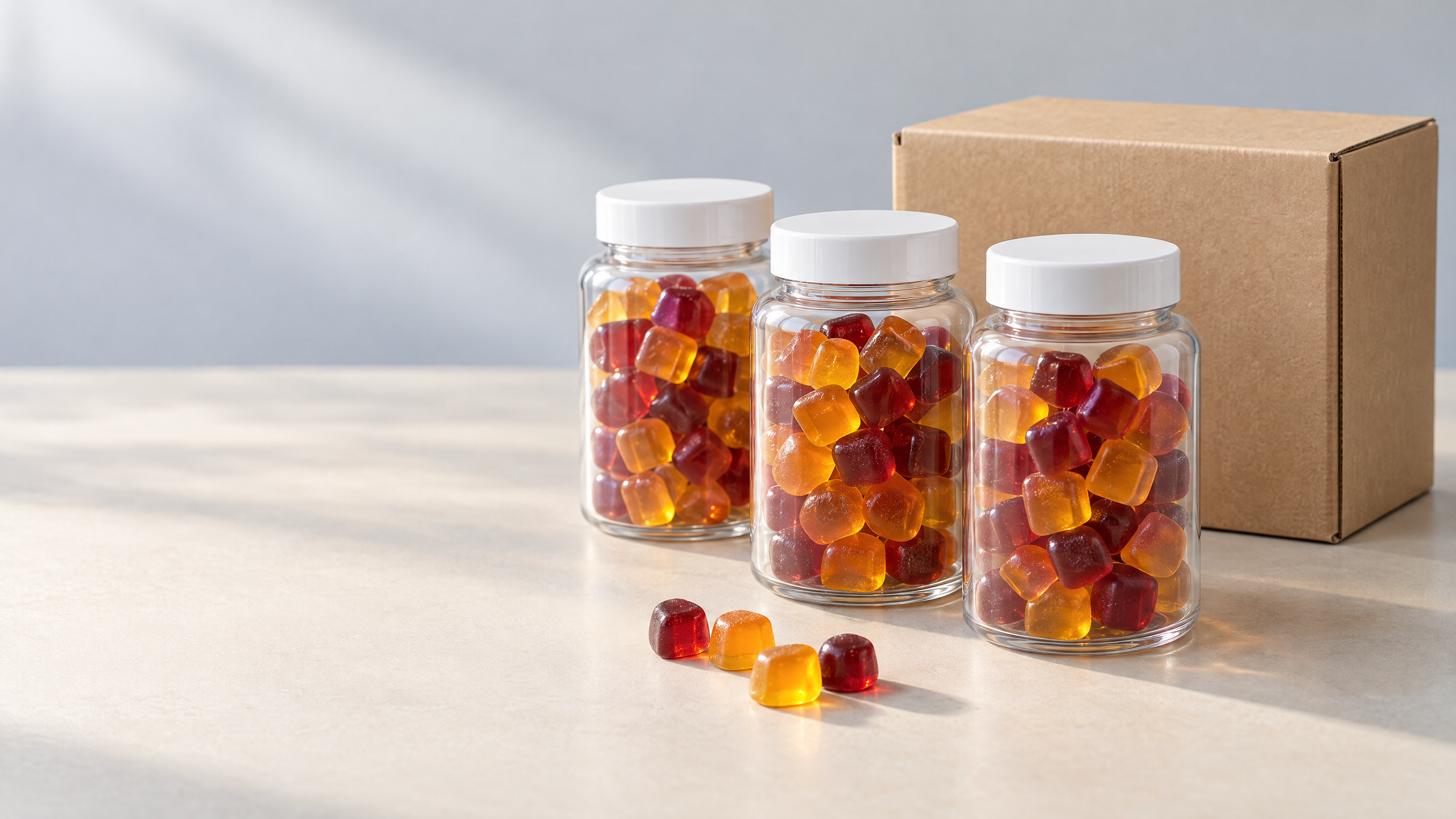
Gummy Supplement Reorders: Plan Your Next Production Run
Your first gummy shipment is selling, and the team is ready to order again. “Same as last time” sounds efficient—until someone discovers that the artwork changed, the preferred bottle is different, or the sales forecast includes a promotion that was never discussed with the manufacturer. A successful reorder starts with a shared definition of the product and the next run. For established supplement brands, the task is not necessarily to restart development. It is to confirm what remains approved, identify what has changed, and connect the requested quantity with a realistic production and inventory plan.
Confirm exactly which gummy you are reordering
Identify the formula version, gummy format, flavor, intended serving, and package count. Reference the approved product documents rather than relying only on the commercial product name. Include the packaging configuration and current artwork revision in the same discussion. This matters even when the brand name and product code have not changed. A revised serving or bottle count can alter what the customer receives. Our gummy supplement serving-size guide explains how those decisions connect; for a reorder, confirm that the existing directions and package configuration still describe the product you intend to buy.
The manufacturer’s records have their own requirements. Under 21 CFR 111.205, manufacturers must prepare and follow a written master manufacturing record for each unique formulation and each batch size.1 A customer’s total order quantity is not automatically the same as a manufacturing batch size. Ask how the proposed order fits the applicable production plan.
Build the quantity around demand and usable inventory
Begin with a current inventory view. Separate stock available for sale from reserved units, stock awaiting a disposition decision, and inventory already committed to another channel. Then review sales patterns alongside planned promotions or distribution changes. Treat forecasts as assumptions, not confirmed orders. A short promotional surge may call for a different inventory discussion than sustained demand. Explain what has changed since the previous run and which commitments are firm.
Bring that information to the manufacturer before fixing the reorder quantity. Ask about the production quantities and commercial terms available for the specific project; do not assume the previous order’s minimums or other terms still apply. Compare the proposed incoming quantity with your expected demand and storage plan instead of choosing a larger run simply because the product has sold before.
Separate a repeat order from a product change
List proposed changes explicitly, even if your team considers them small. A different flavor direction, ingredient source, or gummy format should not disappear inside a purchase order described as a straightforward repeat. Ask which changes need technical review, updated specifications, or renewed approvals before production. FDA’s quality-control requirements address modifications that may affect a supplement’s identity, purity, strength, or composition.2 Those manufacturing responsibilities are distinct from your brand’s decision to change the product.
If you want to explore a new format or flavor, discuss the available options through Sawyer Supplements’ custom gummy manufacturing service. Keep the proposed revision separate from the currently approved reorder until the next steps are agreed. An unchanged repeat order and a reformulated product should not be treated as the same request.
Reconfirm packaging and artwork before the run
Use the reorder to check that everyone has the same approved bottle or other package, closure, fill count, and artwork files. Identify any remaining packaging stock and whether it matches the configuration required for the next run. Ask who is supplying each item, what remains to be approved, and which versions must not be used. Do not assume a previously printed label is suitable after a formula, serving, or package change.
Under 21 CFR 111.410, manufacturers must examine packaging and labels before packaging and labeling each batch to determine whether they conform to the master manufacturing record. The rule also addresses controls over packaging and label issuance and use.3 Your commercial reorder should give the manufacturing team an unambiguous approved direction rather than competing files or informal instructions.
Agree the dependencies—not just a delivery date
Request a timeline for the actual reorder scope. Ask what must be in place before scheduling or production can proceed, including any open approvals, component availability, and applicable commercial requirements. Discuss how finished-product verification, release, and shipping fit the proposed plan. Distinguish the date you need saleable stock from the dates for production, dispatch, and receipt. Make receiving arrangements and downstream delivery needs visible early. A target launch or promotion date is useful planning context, but it is not proof that every dependency can be completed by then.
Also agree which documents your brand will receive for the new run. Our guide to reviewing gummy supplement Certificates of Analysis explains why reports must be connected to the correct batch. Do not reuse a previous run’s report as evidence about a new batch.
Plan how old and new stock will be held
Before adding inventory, confirm the storage instructions and how the receiving team will distinguish existing lots from incoming stock. Avoid mixing unidentified product or losing the connection between a lot and its records. FDA’s holding requirements call for appropriate temperature, humidity, and light conditions and protection against mix-ups, contamination, or deterioration.4 Ask how those requirements and the product’s storage instructions apply to the handling arrangements your brand is planning.
If a label carries an expiration or best-by date, use its supporting information in the inventory discussion. FDA guidance says manufacturers should have data supporting such a date, although the dietary supplement manufacturing rule does not require one.5 Do not treat a new order as a reason to extend the date or assume older stock remains suitable indefinitely.
Frequently asked questions
Does every gummy reorder require new R&D?
Not necessarily. Identify whether the product is unchanged or whether a technical question or proposed revision needs development. Confirm the appropriate route with your manufacturing partner rather than assuming either outcome.
Is a repeat order guaranteed to be faster?
No timeline should be assumed from the word “reorder.” Request a plan based on the actual product scope, approvals, availability, and production requirements.
Can we change the packaging while keeping the formula?
Raise the change explicitly. Confirm the proposed package, artwork, and applicable approvals before treating the order as ready for production.
Prepare your next gummy run with Sawyer Supplements
Bring a clear reorder brief: the approved product version, requested quantity, inventory context, proposed changes, and target receiving date. Identify unresolved questions before the order moves forward.
Contact Sawyer Supplements to discuss your next gummy production run and confirm the scope, available options, and next steps for your project.